XteachR
As a student assistant I secured project funding from the University of Siegen's Besser Digital program for interdisciplinary workshops introducing future teachers to Virtual and Augmented Reality technologies. The project and the workshops were planned and implemented by me and two other student assistants under the supervision of Dr. Steffen Jaschke.
Project Goals
Teachers at schools and universities face the challenge of constantly engaging with new technical possibilities for digital instruction. VR and AR technology holds high potential for improving educational processes, as immersive worlds create authentic learning environments and help sharpen technical, creative, and problem-solving skills. However, these technologies have rarely found their way into university teaching.
The project aimed to:
- Prevent fears of engagement, feelings of being overwhelmed, and barriers among future teachers
- Establish interdisciplinary collaboration between various school subjects and computer science
- Enable students to not only apply but also design their own AR/VR teaching materials
- Develop quality criteria for immersive digital media in education
Workshops
In LehramtPLUS workshops, we introduced students to common AR/VR technologies and existing didactic concepts. Central focus areas included:
- Development of 360-degree tours with tools like Marzipano (open-source)
- Hands-on experience with Microsoft HoloLens 2 for Augmented Reality applications
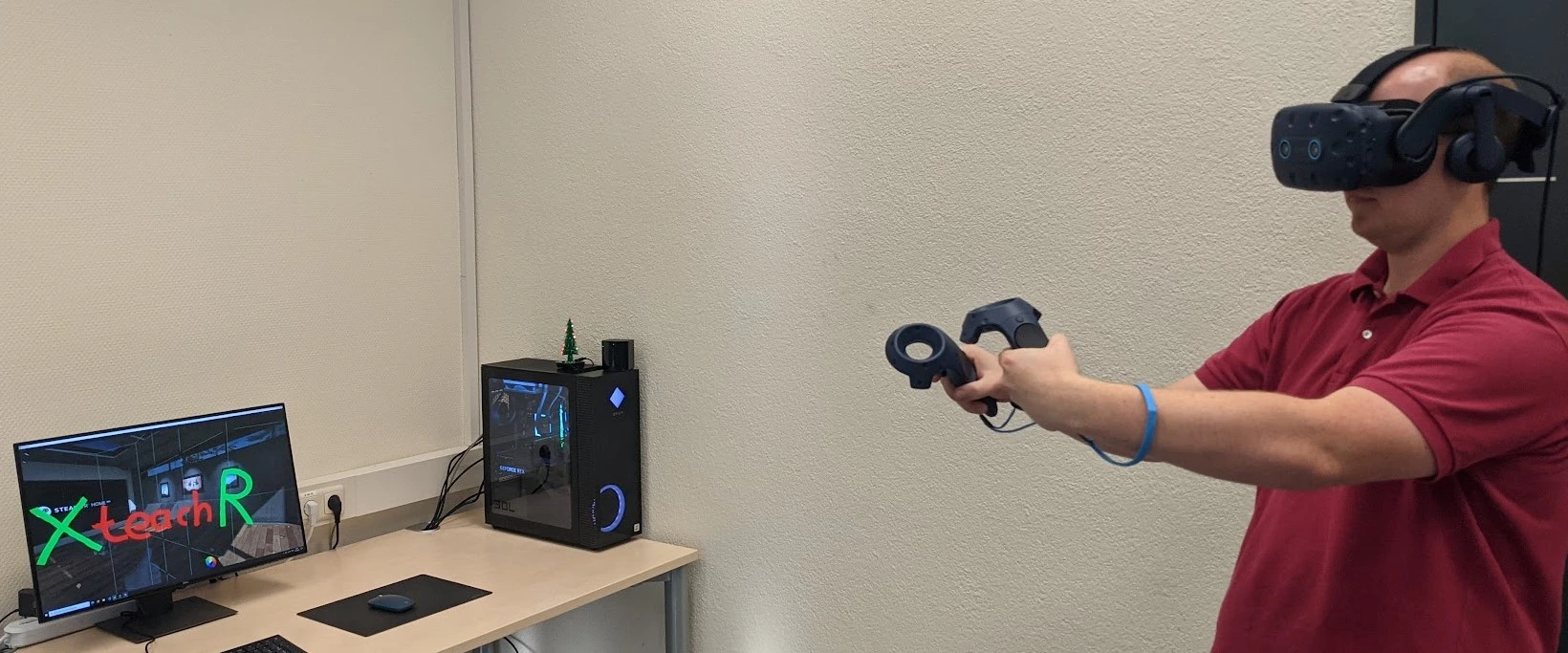
- High-immersion VR experiences using HTC Vive Pro Eye
Each participant developed well-thought-out lesson designs and tested them within the workshop setting.
Results
Students from various subject didactics developed innovative teaching concepts:
- Art: Using the app "Rembrandt Reality" to immerse students in the painting "The Anatomy Lesson of Dr. Tulp"
- Social Sciences: Addressing "Conscious Perception of Advertising" using 360° city videos with Google Cardboards
- Mathematics: Teaching "Composite Shapes Made of Cubes" using the "Math VR" application to overcome spatial imagination challenges
Feedback confirmed that participants successfully reduced their fears of engagement with AR/VR technology and could imagine integrating it into their future teaching.